
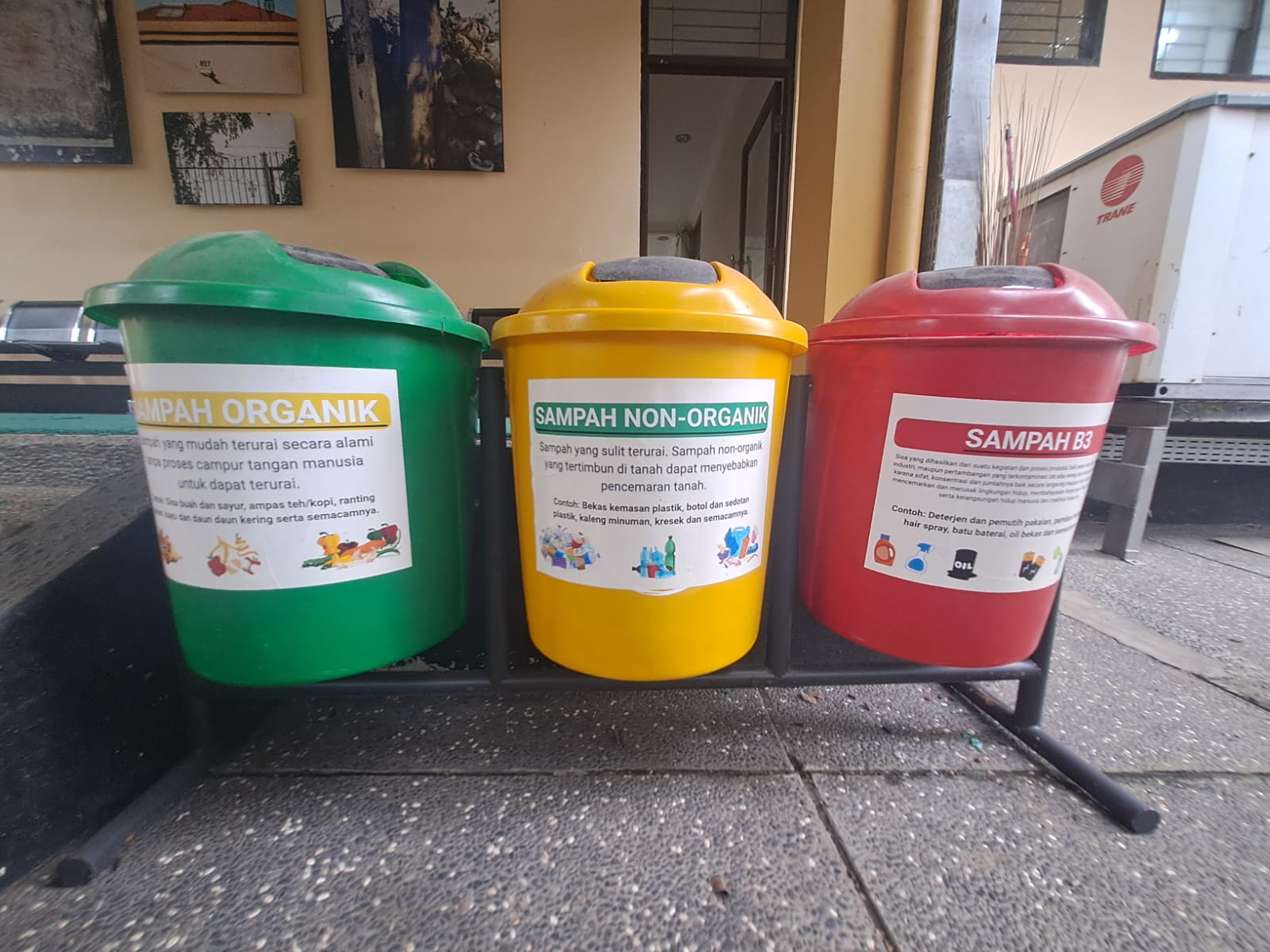
Fikom Unpad Introduces More Separated Waste Bins for Better Waste Management
In its continuous effort to create an environmentally responsible academic environment, the Faculty of Communication Sciences (Fikom) at Universitas Padjadjaran has expanded the availability of separated waste bins across its campus. These bins are specifically designated for organic waste, non-organic waste, and hazardous waste (B3). This initiative not only enhances the Faculty’s waste management infrastructure but also aims to raise awareness among students, lecturers, staff, and visitors about the importance of proper waste segregation.
Building a Culture of Waste Separation
Effective waste management starts at the source, and proper segregation is one of the most critical first steps. By placing more clearly marked and strategically located waste bins throughout the campus, Fikom provides the infrastructure necessary for the academic community to separate waste according to its type:
- Organic waste: leftover food, plant material, and other biodegradable items.
- Non-organic waste: recyclable plastics, paper, glass, and metals.
- Hazardous waste (B3): batteries, chemical containers, and other materials that require special handling.
This approach not only makes recycling and composting more efficient but also minimizes environmental risks caused by improper disposal—particularly in the case of hazardous waste, which can be harmful to human health and the ecosystem if not managed correctly.
Strengthening the Green Campus Vision
The installation of these waste bins is part of Fikom’s larger commitment to supporting Universitas Padjadjaran’s Green Campus vision. Waste separation infrastructure is a tangible step toward reducing landfill contributions, improving recycling rates, and ensuring that potentially dangerous waste is handled in a safe and environmentally friendly manner.
The initiative reflects the Faculty’s belief that sustainability is not just about policies—it is about embedding responsible habits into the daily routines of the campus community. Small actions, such as putting waste in the right bin, can create a cumulative impact that significantly improves the campus’s environmental footprint.
Raising Awareness and Changing Habits
While infrastructure is essential, Fikom recognizes that awareness and education are equally important in achieving sustainable waste management. The Faculty hopes that by visibly separating waste collection points, members of the academic community will be reminded daily of their role in protecting the environment.
Educational campaigns, workshops, and informational posters complement the presence of these bins, helping students and staff understand not only how to separate waste but also why it matters. Over time, this consistent exposure is expected to build long-term habits and a culture of environmental responsibility.
Aligning with the Sustainable Development Goals
This initiative directly supports Sustainable Development Goal (SDG) No. 12: Responsible Consumption and Production, which promotes sustainable waste reduction, reuse, and recycling. It also contributes to SDG 11: Sustainable Cities and Communities by fostering a cleaner and healthier campus environment that serves as a model for the surrounding community. By addressing waste management in a systematic and participatory way, Fikom is helping ensure that campus operations align with global sustainability priorities. (KA)
#GreenCampus #WasteManagement #UnpadImpactStoriesSDG12 #UnpadImpactStoriesSDG11

