
Fikom Unpad Discusses Modern Library Transformation and Local Culture-Based Digital Literacy
The development of artificial intelligence technology or Artificial Intelligence (AI) has brought significant changes to the digital information landscape. Amidst the increasingly fast and complex flow of information, media literacy, digital literacy, and an understanding of socio-cultural contexts are becoming more essential.
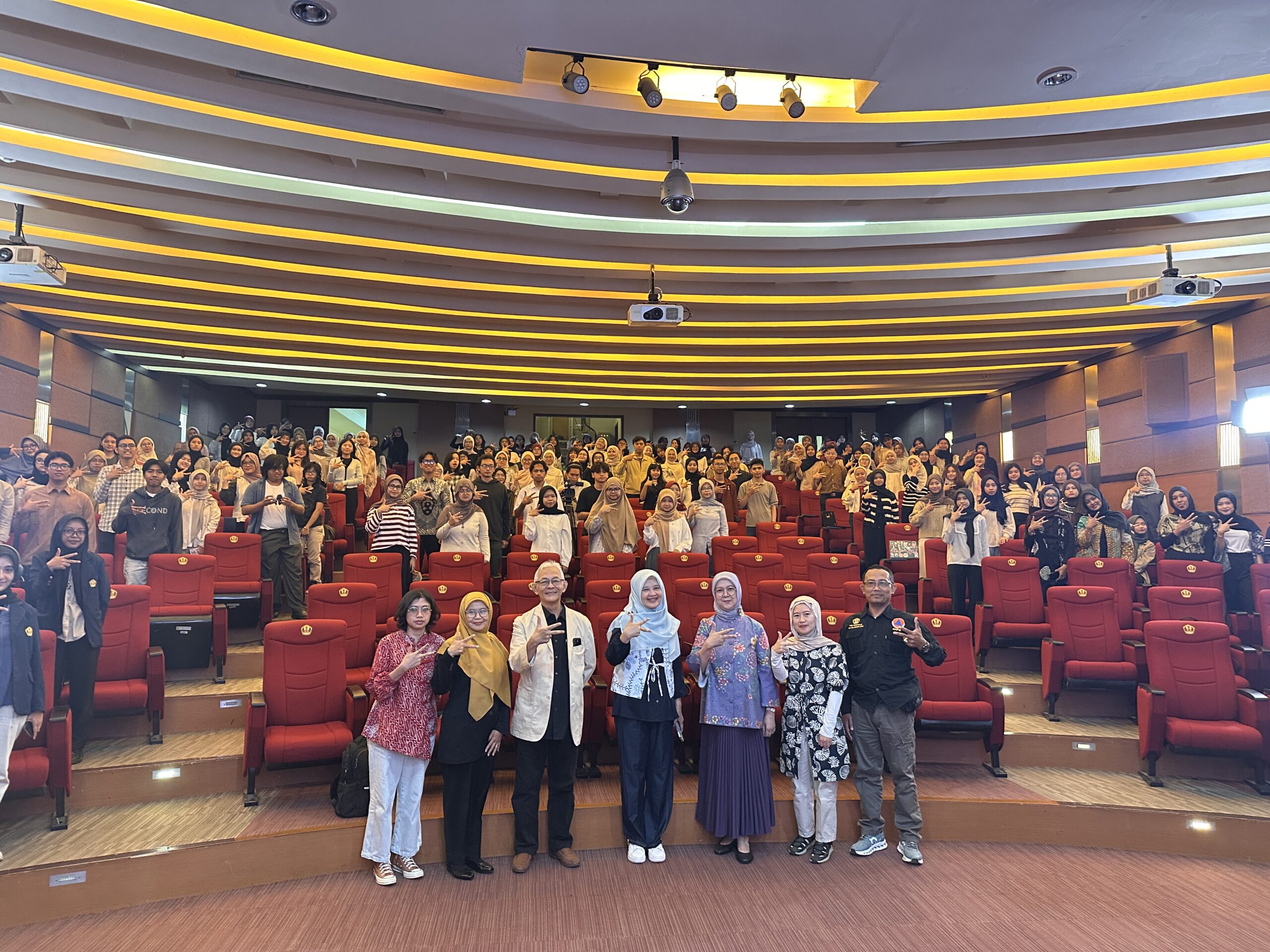
Responding to these challenges, the Library and Information Science Study Program of the Faculty of Communication Sciences, Universitas Padjadjaran (FIKOM Unpad) held an international public lecture titled “Community Information, Media, and Digital Literacy.” This event took place in a hybrid format at the Fikom Unpad Postgraduate Auditorium in Jatinangor, Sumedang, and was broadcast live via the @Perpustakaan.SainsInformasi YouTube channel.
The public lecture was opened by the Vice Dean for Academic, Student Affairs, and Research of Fikom Unpad, Dr. Ira Mirawati, M.Si., along with the Head of the Library and Information Science Study Program, Dr. Saleha Rodiah.
In her remarks, Dr. Ira Mirawati emphasized the importance of students being able to manage media strategically as part of an adaptive learning process in the digital era. Meanwhile, Dr. Saleha Rodiah stated that this activity was designed to strengthen literacy understanding that is not only academically relevant but also has a direct impact on the community.
Modern Libraries as Interactive Learning Spaces
The first session featured Prof. Dr. Mega Subramaniam, Ph.D., a professor from the College of Information, University of Maryland, USA, and a Fulbright Scholar at Universitas Gadjah Mada. In her presentation, Prof. Mega discussed the importance of transforming modern libraries into interactive learning spaces through a Connected Learning approach.
Guided by moderator Wina Erwina, M.A., Ph.D., Prof. Mega explained that modern libraries no longer function solely as storage and access points for information, but also as spaces that connect the interests, social relationships, and future opportunities of young people.
“The main task of today’s library is to be a fun and engaging place that can connect teenagers’ interests, social connections, and their future opportunities,” said Prof. Mega.
She also introduced the concept of youth participatory culture known as HOMAGO or Hanging Out, Messing Around, Geeking Out. . Through this concept, libraries can become spaces that encourage teenagers to explore, collaborate, and develop their interests more actively.
Prof. Mega also shared several best practices for inclusive programs in the United States, such as SciDentity, HackHealth, Connected Camps, and Slowest Computer on Earth. . These programs are considered capable of supporting various learning modalities for the younger generation through a more participatory and contextual approach.
Local Culture as a Countermeasure to Hoaxes and Digital Manipulation
In the second session, the public lecture featured Prof. Agus Rusmana, M.A., who presented material on “Introduction to Local Culture to Prevent Digital Manipulation Information Attacks.”
In his presentation, Prof. Agus highlighted the increasingly sophisticated manipulation of digital information in the AI era. Artificial intelligence technology can now be misused to create a real fake, in the form of both manipulated visuals and audio, aimed at deceiving the public.
According to Prof. Agus, efforts to detect false information are not enough through technical digital knowledge and logical thinking skills alone. The public also needs to have a sensitivity to local cultural contexts, including habits, expressions, gestures, and ways of communicating inherent in daily life.
Familiarity with local culture or local culture familiarity can be an important defense in recognizing anomalies in digitally manipulated information. By understanding cultural contexts, the public is expected to be better able to assess whether a digital visual, audio, or narrative aligns with the social reality they know.
Through this public lecture, Fikom Unpad encourages students to not only be proficient in using digital technology but also critical in reading information. Digital literacy needs to go hand in hand with cultural understanding so that students can become smart, adaptive agents of change who remain rooted in local wisdom.
Author : Evi Nursanti Rukmana
Source and Photo : Press Release of the Library and Information Science Study Program, Fikom Unpad
Editor : Fikom Unpad Public Relations
