Review of the Documentary Film “Ngomi O Obi” with TV Tempo
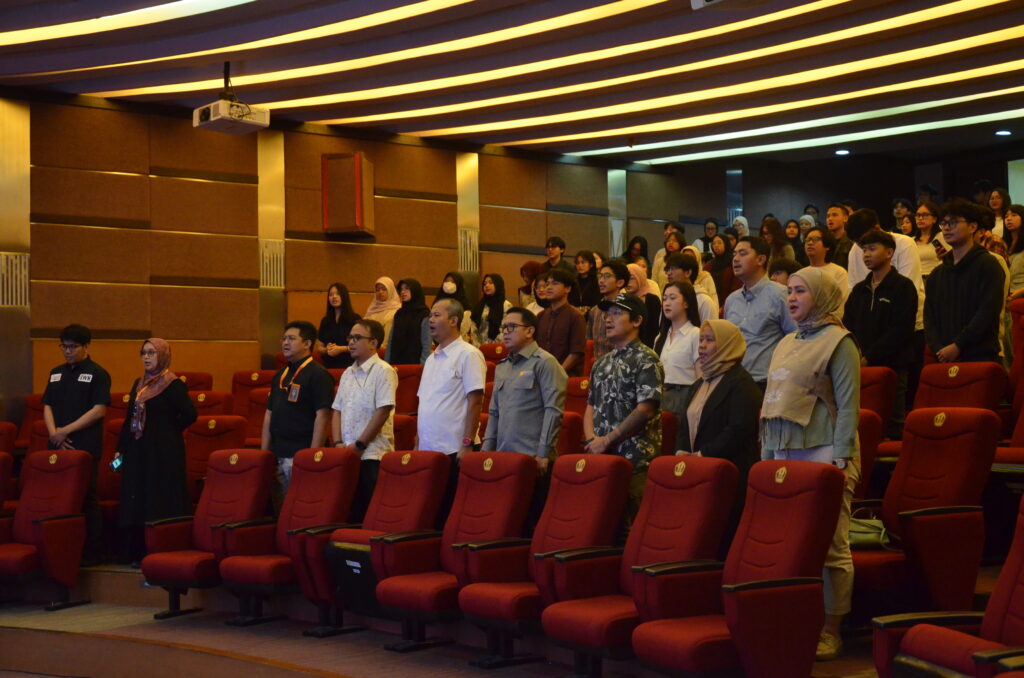
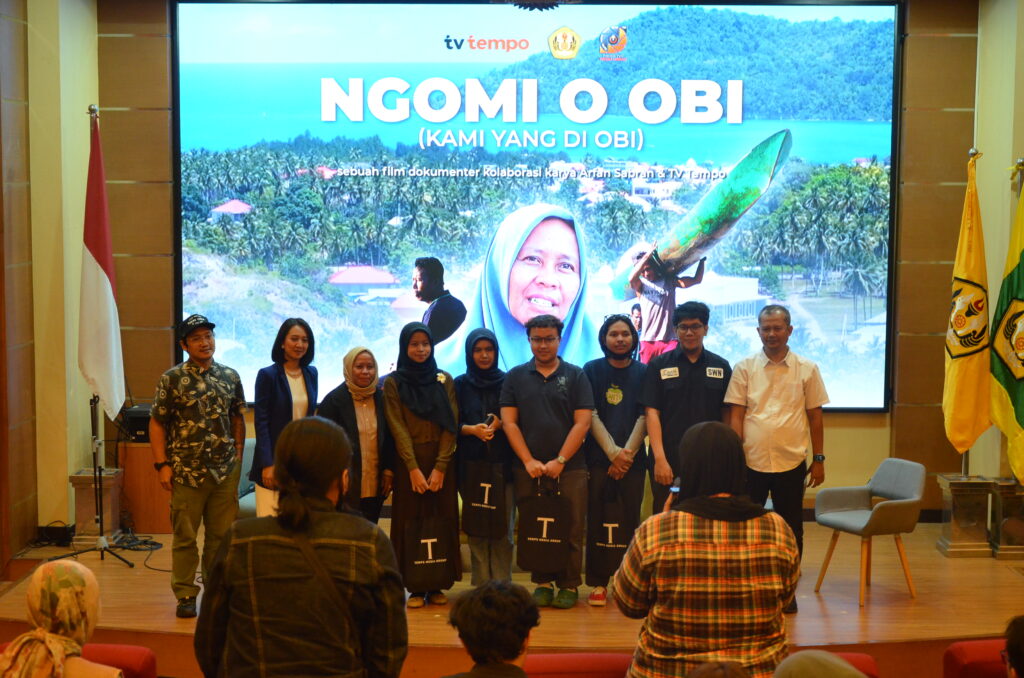
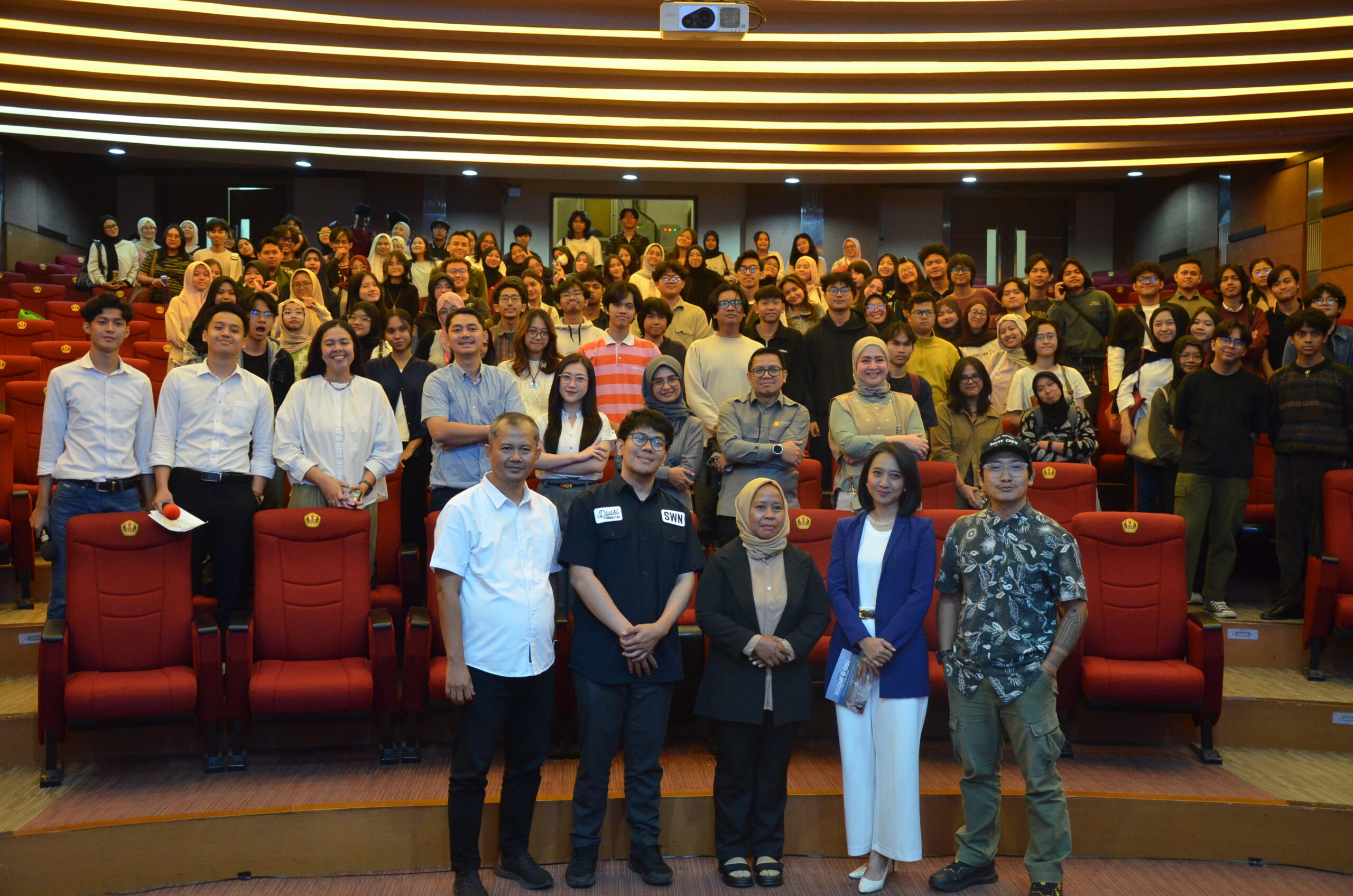
Tempo and the Television and Film Study Program, Faculty of Communication, Unpad held a documentary film review entitled “Ngomi O Obi”, which was held on Wednesday, May 21, 2025 at 09.00 WIB at the Postgraduate Auditorium of Faculty of Communication, Unpad. This event presented speakers Niky as Director of Photography, Anton Apriana who is the Director of Tv Tempo, Mochamad Arbani, Lecturer of the Television and Film Study Program and Mama Nia as a character in the film, and was attended by students of the Television and Film, Journalism, and Media Production Management study programs.
The event began with remarks from the Head of the Television and Film Study Program, Dr. Sri Seti Indriani, M.Si. She said that students must be able to criticize a film. “This film is a special film because it highlights life on Obi Island,” she said.
The first speaker, Niky, said that “communication in making a documentary film is very important.” In addition, field conditions affect the results of documentary films, he advised students if they are going to make a documentary film, to get closer personally to the community that will be used as the source for the documentary film that will be made. “Before making a documentary film, we must first explain the purpose and what we want to do and we must chat to get very close to the source,” he said.
The second speaker, Anton Apriana, said that Tempo has superior products, one of which is Tv Tempo which has documentary films, “Documentary films are superior products, one of which is the product of Tv Tempo”. In addition, Anton Apriana also explained that good journalism is by taking an approach in terms of benefits. “Documentary films are a form of journalism in the form of audio visuals that describe environmental impacts such as the impact of mining companies, and how the environmental impact of mining on fishermen on Obi Island,” he said. Anton Apriana also said that documentary films can be a learning medium by looking at existing issues, because people nowadays rarely read newspapers or magazines.
The third speaker, Mochamad Arbani, stated that “Documentary films are basically the same as other films, except that the advantages of documentary films are very flexible,” he said. According to him, the documentary film “Ngomi O Obi” can be classified as an Ecodocumentary film. In addition, he also said that “in making a documentary film, you will find many unexpected things”. Documentary films can also be a medium of information that shows real life.
The fourth speaker, Mama Nia, said that at first I was invited to be a resource person for this film. Usually on Obi Island there are only those who take pictures, I didn’t expect to be invited to play in a film like this. Mama Nia also advised that with Tv Tempo, the Obi community can be known more widely from the agricultural, fishing, and mining sectors. “With the presence of a mine on Obi Island, it can help our economy as the Obi community,” she said. The event ended with a question and answer session and a group photo. (HS)